-->
- Start Menu Inop
- Where Is The Start Menu Windows 10
- Start Menu Shortcut
- Start Menu Locations
- Start Menu Windows 7
- Start Menu Not Working Windows 10
- Start Menu Experience Host
Applies to
- Windows 10
Looking for consumer information? See Customize the Start menu
On Windows 10 for desktop editions, the customized Start works by:
Start Application Identity Service. The Application Identity Service is a Windows 10 service that casual users shouldn’t touch with a ten-foot pole. However, there’s a chance that forcing the application to run can fix the Start menu problem. Go to Run (Windows + R) and type SERVICES.MSC. Find Application Identity in the list of services. In general, the My Computer option in the start menu is widely used not only to access the File Explorer but also to open the System Properties window and Computer Management window. If that’s the case and you’ve recently transitioned to Windows 10, you might be wondering where is My Computer in the Windows 10 start menu. To organize your Start menu folders and shortcuts, click on the Start button, right-click on the All Programs entry, and then click on either Open or Open All Users. Files Explorer pops up.
While the new Start menu is hidden in this update, you can turn it on by editing the registry, which is a powerful tool in Windows 10. How to get the new Start menu in Windows 10.
Windows 10 checks the chosen base default layout, such as the desktop edition and whether Cortana is supported for the country/region.
Windows 10 reads the LayoutModification.xml file and allows groups to be appended to Start. The groups have the following constraints:
- 2 groups that are 6 columns wide, or equivalent to the width of 3 medium tiles.
- 2 medium-sized tile rows in height. Windows 10 ignores any tiles that are pinned beyond the second row.
- No limit to the number of apps that can be pinned. There is a theoretical limit of 24 tiles per group (4 small tiles per medium square x 3 columns x 2 rows).

Note
To use the layout modification XML to configure Start with roaming user profiles, see Deploying Roaming User Profiles.
LayoutModification XML
IT admins can provision the Start layout using a LayoutModification.xml file. This file supports several mechanisms to modify or replace the default Start layout and its tiles. The easiest method for creating a LayoutModification.xml file is by using the Export-StartLayout cmdlet; see Customize and export Start layout for instructions.
Required order
The XML schema for LayoutModification.xml requires the following order for tags directly under the LayoutModificationTemplate node:
- LayoutOptions
- DefaultLayoutOverride
- RequiredStartGroupsCollection
- AppendDownloadOfficeTile –OR– AppendOfficeSuite (only one Office option can be used at a time)
- AppendOfficeSuiteChoice
- TopMFUApps
- CustomTaskbarLayoutCollection
- InkWorkspaceTopApps
- StartLayoutCollection
Comments are not supported in the LayoutModification.xml file.
Supported elements and attributes
Note
To make sure the Start layout XML parser processes your file correctly, follow these guidelines when working with your LayoutModification.xml file:
- Do not leave spaces or white lines in between each element.
- Do not add comments inside the StartLayout node or any of its children elements.
- Do not add multiple rows of comments.
The following table lists the supported elements and attributes for the LayoutModification.xml file.
Note
RequiredStartGroupsCollection and AppendGroup syntax only apply when the Import-StartLayout method is used for building and deploying Windows images.
| Element | Attributes | Description |
|---|---|---|
| LayoutModificationTemplate | xmlns xmlns:defaultlayout xmlns:start Version | Use to describe the changes to the default Start layout |
| LayoutOptions Parent: LayoutModificationTemplate | StartTileGroupsColumnCount FullScreenStart | Use to specify: - Whether to use full screen Start on the desktop - The number of tile columns in the Start menu |
| RequiredStartGroupsCollection Parent: LayoutModificationTemplate | n/a | Use to contain collection of RequiredStartGroups |
| RequiredStartGroups Parent: RequiredStartGroupsCollection | Region | Use to contain the AppendGroup tags, which represent groups that can be appended to the default Start layout |
| AppendGroup Parent: RequiredStartGroups | Name | Use to specify the tiles that need to be appended to the default Start layout |
| start:Tile Parent: AppendGroup | AppUserModelID Size Row Column | Use to specify any of the following: - A Universal Windows app - A Windows 8 or Windows 8.1 app Note that AppUserModelID is case-sensitive. |
| start:Folder Parent: start:Group | Name (in Windows 10, version 1809 and later only) Size Row Column LocalizedNameResourcetag | Use to specify a folder of icons; can include Tile, SecondaryTile, and DesktopApplicationTile. |
| start:DesktopApplicationTile Parent: AppendGroup | DesktopApplicationID DesktopApplicationLinkPath Size Row Column | Use to specify any of the following: - A Windows desktop application with a known AppUserModelID - An application in a known folder with a link in a legacy Start Menu folder - A Windows desktop application link in a legacy Start Menu folder - A Web link tile with an associated .url file that is in a legacy Start Menu folder |
| start:SecondaryTile Parent: AppendGroup | AppUserModelID TileID Arguments DisplayName Square150x150LogoUri ShowNameOnSquare150x150Logo ShowNameOnWide310x150Logo Wide310x150LogoUri BackgroundColor ForegroundText IsSuggestedApp Size Row Column | Use to pin a Web link through a Microsoft Edge secondary tile. Note that AppUserModelID is case-sensitive. |
| TopMFUApps Parent: LayoutModificationTemplate | n/a | Use to add up to 3 default apps to the frequently used apps section in the system area. Note: Only applies to versions of Windows 10 earlier than version 1709. In Windows 10, version 1709, you can no longer pin apps to the Most Frequently Used apps list in Start. |
| Tile Parent: TopMFUApps | AppUserModelID | Use with the TopMFUApps tags to specify an app with a known AppUserModelID. Note: Only applies to versions of Windows 10 earlier than version 1709. In Windows 10, version 1709, you can no longer pin apps to the Most Frequently Used apps list in Start. |
| DesktopApplicationTile Parent: TopMFUApps | LinkFilePath | Use with the TopMFUApps tags to specify an app without a known AppUserModelID. Note: Only applies to versions of Windows 10 earlier than version 1709. In Windows 10, version 1709, you can no longer pin apps to the Most Frequently Used apps list in Start. |
| AppendOfficeSuite Parent: LayoutModificationTemplate | n/a | Use to add the in-box installed Office suite to Start. For more information, see Customize the Office suite of tiles. Do not use this tag with AppendDownloadOfficeTile |
| AppendDownloadOfficeTile Parent: LayoutModificationTemplate | n/a | Use to add a specific Download Office tile to a specific location in Start Do not use this tag with AppendOfficeSuite |
LayoutOptions
New devices running Windows 10 for desktop editions will default to a Start menu with 2 columns of tiles unless boot to tablet mode is enabled. Devices with screens that are under 10' have boot to tablet mode enabled by default. For these devices, users see the full screen Start on the desktop. You can adjust the following features:
- Boot to tablet mode can be set on or off.
- Set full screen Start on desktop to on or off.To do this, add the LayoutOptions element in your LayoutModification.xml file and set the FullScreenStart attribute to true or false.
- Specify the number of columns in the Start menu to 1 or 2.To do this, add the LayoutOptions element in your LayoutModification.xml file and set the StartTileGroupsColumnCount attribute to 1 or 2.
The following example shows how to use the LayoutOptions element to specify full screen Start on the desktop and to use 1 column in the Start menu:

For devices being upgraded to Windows 10 for desktop editions:
- Devices being upgraded from Windows 7 will default to a Start menu with 1 column.
- Devices being upgraded from Windows 8.1 or Windows 8.1 Upgrade will default to a Start menu with 2 columns.
RequiredStartGroups
The RequiredStartGroups tag contains AppendGroup tags that represent groups that you can append to the default Start layout.
Important
For Windows 10 for desktop editions, you can add a maximum of two (2) AppendGroup tags per RequiredStartGroups tag.
You can also assign regions to the append groups in the RequiredStartGroups tag's using the optional Region attribute or you can use the multivariant capabilities in Windows provisioning. If you are using the Region attribute, you must use a two-letter country code to specify the country/region that the append group(s) apply to. To specify more than one country/region, use a pipe ('|') delimiter as shown in the following example:
If the country/region setting for the Windows device matches a RequiredStartGroups, then the tiles laid out within the RequiredStartGroups is applied to Start.
If you specify a region-agnostic RequiredStartGroups (or one without the optional Region attribute) then the region-agnostic RequiredStartGroups is applied to Start.
AppendGroup
AppendGroup tags specify a group of tiles that will be appended to Start. There is a maximum of two AppendGroup tags allowed per RequiredStartGroups tag.
For Windows 10 for desktop editions, AppendGroup tags contain start:Tile, start:DesktopApplicationTile, or start:SecondaryTile tags.
You can specify any number of tiles in an AppendGroup, but you cannot specify a tile with a Row attribute greater than 4. The Start layout does not support overlapping tiles.
Specify Start tiles
To pin tiles to Start, partners must use the right kind of tile depending on what you want to pin.
Tile size and coordinates
All tile types require a size (Size) and coordinates (Row and Column) attributes regardless of the tile type that you use when prepinning items to Start.
The following table describes the attributes that you must use to specify the size and location for the tile.
| Attribute | Description |
|---|---|
| Size | Determines how large the tile will be. - 1x1 - small tile - 2x2 - medium tile - 4x2 - wide tile - 4x4 - large tile |
| Row | Specifies the row where the tile will appear. |
| Column | Specifies the column where the tile will appear. |
For example, a tile with Size='2x2', Row='2', and Column='2' results in a tile located at (2,2) where (0,0) is the top-left corner of a group.
#### start:TileYou can use the start:Tile tag to pin any of the following apps to Start:
- A Universal Windows app
- A Windows 8 app or Windows 8.1 app
To specify any one of these apps, you must set the AppUserModelID attribute to the application user model ID that's associated with the corresponding app.
Important
AppUserModelID (AUMID) is case-sensitive.
The following example shows how to pin the Microsoft Edge Universal Windows app:
#### start:DesktopApplicationTileYou can use the start:DesktopApplicationTile tag to pin a Windows desktop application to Start. There are two ways you can specify a Windows desktop application:
By using a path to a shortcut link (.lnk file) to a Windows desktop application.
Note
In Start layouts for Windows 10, version 1703, you should use DesktopApplicationID rather than DesktopApplicationLinkPath if you are using Group Policy or MDM to apply the start layout and the application was installed after the user's first sign-in.
To pin a Windows desktop application through this method, you must first add the .lnk file in the specified location when the device first boots.
The following example shows how to pin the Command Prompt:
You must set the DesktopApplicationLinkPath attribute to the .lnk file that points to the Windows desktop application. The path also supports environment variables.
If you are pointing to a third-party Windows desktop application and the layout is being applied before the first boot, you must put the .lnk file in a legacy Start Menu directory before first boot; for example, '%APPDATA%MicrosoftWindowsStart MenuPrograms' or the all users profile '%ALLUSERSPROFILE%MicrosoftWindowsStart MenuPrograms'.
By using the application's application user model ID, if this is known. If the Windows desktop application doesn't have one, use the shortcut link option.
You can use the Get-StartApps cmdlet on a PC that has the application pinned to Start to obtain the app ID.
To pin a Windows desktop application through this method, you must set the DesktopApplicationID attribute to the application user model ID that's associated with the corresponding app.
The following example shows how to pin the File Explorer Windows desktop application:
You can also use the start:DesktopApplicationTile tag as one of the methods for pinning a Web link to Start. The other method is to use a Microsoft Edge secondary tile.
To pin a legacy .url shortcut to Start, you must create .url file (right-click on the desktop, select New > Shortcut House flipper - garden dlc download free. , and then type a Web URL). You must add this .url file in a legacy Start Menu directory before first boot; for example, %APPDATA%MicrosoftWindowsStart MenuPrograms or the all users profile %ALLUSERSPROFILE%MicrosoftWindowsStart MenuPrograms.
The following example shows how to create a tile of the Web site's URL, which you can treat similarly to a Windows desktop application tile:
Note
In Windows 10, version 1703, Export-StartLayout will use DesktopApplicationLinkPath for the .url shortcut. You must change DesktopApplicationLinkPath to DesktopApplicationID and provide the URL.
#### start:SecondaryTileYou can use the start:SecondaryTile tag to pin a Web link through a Microsoft Edge secondary tile. This method doesn't require any additional action compared to the method of using legacy .url shortcuts (through the start:DesktopApplicationTile tag).
The following example shows how to create a tile of the Web site's URL using the Microsoft Edge secondary tile:
The following table describes the other attributes that you can use with the start:SecondaryTile tag in addition to Size, Row, and Column.
| Attribute | Required/optional | Description |
|---|---|---|
| AppUserModelID | Required | Must point to Microsoft Edge. Note that AppUserModelID is case-sensitive. |
| TileID | Required | Must uniquely identify your Web site tile. |
| Arguments | Required | Must contain the URL of your Web site. |
| DisplayName | Required | Must specify the text that you want users to see. |
| Square150x150LogoUri | Required | Specifies the logo to use on the 2x2 tile. |
| Wide310x150LogoUri | Optional | Specifies the logo to use on the 4x2 tile. |
| ShowNameOnSquare150x150Logo | Optional | Specifies whether the display name is shown on the 2x2 tile. The values you can use for this attribute are true or false. |
| ShowNameOnWide310x150Logo | Optional | Specifies whether the display name is shown on the 4x2 tile. The values you can use for this attribute are true or false. |
| BackgroundColor | Optional | Specifies the color of the tile. You can specify the value in ARGB hexadecimal (for example, #FF112233) or specify 'transparent'. |
| ForegroundText | Optional | Specifies the color of the foreground text. Set the value to either 'light' or 'dark'. |
Secondary Microsoft Edge tiles have the same size and location behavior as a Universal Windows app, Windows 8 app, or Windows 8.1 app.
TopMFUApps
Note
Only applies to versions of Windows 10 earlier than version 1709. In Windows 10, version 1709, you can no longer pin apps to the Most Frequently Used apps list in Start.
You can use the TopMFUApps tag to add up to 3 default apps to the frequently used apps section in the system area, which delivers system-driven lists to the user including important or frequently accessed system locations and recently installed apps.
You can use this tag to add:
- Apps with an AppUserModelID attribute - This includes Windows desktop applications that have a known application user model ID. Use a Tile tag with the AppUserModelID attribute set to the app's application user model ID.
- Apps without a AppUserModelID attribute - For these apps, you must create a .lnk file that points to the installed app and place the .lnk file in the
%ALLUSERSPROFILE%MicrosoftWindowsStart MenuProgramsdirectory. Use a DesktopApplicationTile tag with the LinkFilePath attribute set to the .lnk file name and path.
The following example shows how to modify your LayoutModification.xml file to add both kinds of apps to the system area in Start:
AppendOfficeSuite
You can use the AppendOfficeSuite tag to add the in-box installed Office suite of apps to Start.
Note
The OEM must have installed Office for this tag to work.
The following example shows how to add the AppendOfficeSuite tag to your LayoutModification.xml file to append the full Universal Office suite to Start:
AppendOfficeSuiteChoice
This tag is added in Windows 10, version 1803. You have two options in this tag:
<AppendOfficeSuiteChoice Choice='DesktopBridgeSubscription'/><AppendOfficeSuiteChoice Choice='DesktopBridge'/>
Use Choice=DesktopBridgeSubscription on devices running Windows 10, version 1803, that have Office 365 preinstalled. This will set the heading of the Office suite of tiles to Office 365, to highlight the Office 365 apps that you've made available on the device.
Use Choice=DesktopBridge on devices running versions of Windows 10 earlier than version 1803, and on devices shipping with perpetual licenses for Office. This will set the heading of the Office suite of tiles to Create.
For more information, see Customize the Office suite of tiles.
AppendDownloadOfficeTile
You can use the AppendDownloadOfficeTile tag to append the Office trial installer to Start. This tag adds the Download Office tile to Start and the download tile will appear at the bottom right-hand side of the second group.
Note
The OEM must have installed the Office trial installer for this tag to work.
The following example shows how to add the AppendDownloadOfficeTile tag to your LayoutModification.xml file:
Sample LayoutModification.xml
The following sample LayoutModification.xml shows how you can configure the Start layout for devices running Windows 10 for desktop editions:
Use Windows Provisioning multivariant support
The Windows Provisioning multivariant capability allows you to declare target conditions that, when met, supply specific customizations for each variant condition. For Start customization, you can create specific layouts for each variant that you have. To do this, you must create a separate LayoutModification.xml file for each variant that you want to support and then include these in your provisioning package. For more information on how to do this, see Create a provisioning package with multivariant settings.
The provisioning engine chooses the right customization file based on the target conditions that were met, adds the file in the location that's specified for the setting, and then uses the specific file to customize Start. To differentiate between layouts, you can add modifiers to the LayoutModification.xml filename such as 'LayoutCustomization1'. Regardless of the modifier that you use, the provsioning engine will always output 'LayoutCustomization.xml' so that the operating system has a consistent file name to query against.
For example, if you want to ensure that there's a specific layout for a certain condition, you can:
- Create a specific layout customization file and then name it LayoutCustomization1.xml.
- Include the file as part of your provisioning package.
- Create your multivariant target and reference the XML file within the target condition in the main customization XML file.
The following example shows what the overall customization file might look like with multivariant support for Start:
When the condition is met, the provisioning engine takes the XML file and places it in the location that the operating system has set and then the Start subsystem reads the file and applies the specific customized layout.
You must repeat this process for all variants that you want to support so that each variant can have a distinct layout for each of the conditions and targets that need to be supported. For example, if you add a Language condition, you can create a Start layout that has its own localized group.
Add the LayoutModification.xml file to the device
Once you have created your LayoutModification.xml file to customize devices that will run Windows 10 for desktop editions, you can use Windows ICD methods to add the XML file to the device.
- In the Available customizations pane, expand Runtime settings, select Start and then click the StartLayout setting.
- In the middle pane, click Browse to open File Explorer.
- In the File Explorer window, navigate to the location where you saved your LayoutModification.xml file.
- Select the file and then click Open.
This should set the value of StartLayout. The setting appears in the Selected customizations pane.
Note

There is currently no way to add the .url and .lnk files through Windows ICD.
Start Menu Inop
Once you have created the LayoutModification.xml file and it is present in the device, the system overrides the base default layout and any Unattend settings used to customize Start.
Related topics
-->Applies to
- Windows 10
Looking for consumer information? See Customize the Start menu
In Windows 10 Pro, Enterprise, and Education, you can use a Group Policy Object (GPO) to deploy a customized Start and taskbar layout to users in a domain. No reimaging is required, and the layout can be updated simply by overwriting the .xml file that contains the layout. This enables you to customize Start and taskbar layouts for different departments or organizations, with minimal management overhead.
This topic describes how to update Group Policy settings to display a customized Start and taskbar layout when the users sign in. By creating a domain-based GPO with these settings, you can deploy a customized Start and taskbar layout to users in a domain.
Warning
When a full Start layout is applied with this method, the users cannot pin, unpin, or uninstall apps from Start. Users can view and open all apps in the All Apps view, but they cannot pin any apps to Start. When a partial Start layout is applied, the contents of the specified tile groups cannot be changed, but users can move those groups, and can also create and customize their own groups. When you apply a taskbar layout, users will still be able to pin and unpin apps, and change the order of pinned apps.
Before you begin: Customize and export Start layout
Where Is The Start Menu Windows 10
Operating system requirements
In Windows 10, version 1607, Start and taskbar layout control using Group Policy is supported in Windows 10 Enterprise and Windows 10 Education. In Windows 10, version 1703, Start and taskbar layout control using Group Policy is also supported in Windows 10 Pro.
The GPO can be configured from any computer on which the necessary ADMX and ADML files (StartMenu.admx and StartMenu.adml) for Windows 10 are installed. In Group Policy, ADMX files are used to define Registry-based policy settings in the Administrative Templates category. To find out how to create a central store for Administrative Templates files, see article 929841, written for Windows Vista and still applicable in the Microsoft Knowledge Base.
Start Menu Shortcut
How Start layout control works
Three features enable Start and taskbar layout control:
The Export-StartLayout cmdlet in Windows PowerShell exports a description of the current Start layout in .xml file format.
Note
To import the layout of Start to a mounted Windows image, use the Import-StartLayout cmdlet.
You can modify the Start .xml file to include
<CustomTaskbarLayoutCollection>or create an .xml file just for the taskbar configuration.In Group Policy, you use the Start Layout settings for the Start Menu and Taskbar administrative template to set a Start and taskbar layout from an .xml file when the policy is applied. The Group Policy object doesn't support an empty tile layout, so the default tile layout for Windows is loaded in that case.
Note
To learn how customize Start to include your line-of-business apps when you deploy Windows 10, see Customize the Windows 10 Start layout.
Start Menu Locations
Use Group Policy to apply a customized Start layout in a domain
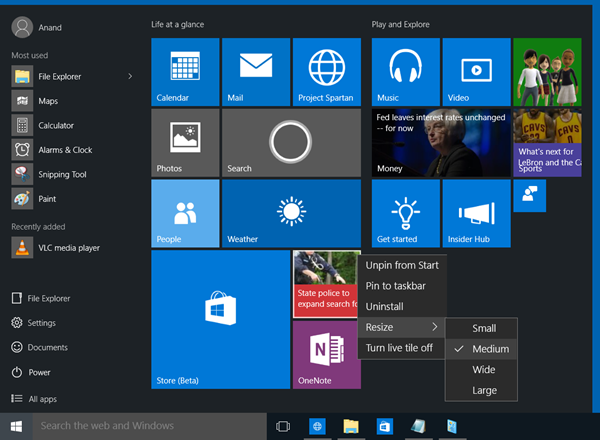
To apply the Start and taskbar layout to users in a domain, use the Group Policy Management Console (GPMC) to configure a domain-based Group Policy Object (GPO) that sets Start Layout policy settings in the Start Menu and Taskbar administrative template for users in a domain.
The GPO applies the Start and taskbar layout at the next user sign-in. Each time the user signs in, the timestamp of the .xml file with the Start and taskbar layout is checked and if a newer version of the file is available, the settings in the latest version of the file are applied.
The GPO can be configured from any computer on which the necessary ADMX and ADML files (StartMenu.admx and StartMenu.adml) for Windows 10 are installed.
Start Menu Windows 7
The .xml file with the Start and taskbar layout must be located on shared network storage that is available to the users’ computers when they sign in and the users must have Read-only access to the file. If the file is not available when the first user signs in, Start and the taskbar are not customized during the session, but the user will be prevented from making changes to Start. On subsequent sign-ins, if the file is available at sign-in, the layout it contains will be applied to the user's Start and taskbar.
For information about deploying GPOs in a domain, see Working with Group Policy Objects.
Use Group Policy to apply a customized Start layout on the local computer
You can use the Local Group Policy Editor to provide a customized Start and taskbar layout for any user who signs in on the local computer. To display the customized Start and taskbar layout for any user who signs in, configure Start Layout policy settings for the Start Menu and Taskbar administrative template. You can use the Start Menu and Taskbar administrative template in User Configuration or Computer Configuration.
Start Menu Not Working Windows 10
Note
This procedure applies the policy settings on the local computer only. For information about deploying the Start and taskbar layout to users in a domain, see Use Group Policy to deploy a customized Start layout in a domain.
This procedure creates a Local Group Policy that applies to all users on the computer. To configure Local Group Policy that applies to a specific user or group on the computer, see Step-by-Step Guide to Managing Multiple Local Group Policy Objects. The guide was written for Windows Vista and the procedures still apply to Windows 10.
This procedure adds the customized Start and taskbar layout to the user configuration, which overrides any Start layout settings in the local computer configuration when a user signs in on the computer.
To configure Start Layout policy settings in Local Group Policy Editor
On the test computer, press the Windows key, type gpedit, and then select Edit group policy (Control panel).
Go to User Configuration or Computer Configuration > Administrative Templates >Start Menu and Taskbar.
Right-click Start Layout in the right pane, and click Edit.
This opens the Start Layout policy settings.
Enter the following settings, and then click OK:
Select Enabled.
Under Options, specify the path to the .xml file that contains the Start and taskbar layout. For example, type C:UsersTest01StartScreenMarketing.xml.
Optionally, enter a comment to identify the Start and taskbar layout.
Important
If you disable Start Layout policy settings that have been in effect and then re-enable the policy, users will not be able to make changes to Start, however the layout in the .xml file will not be reapplied unless the file has been updated. In Windows PowerShell, you can update the timestamp on a file by running the following command:
(ls <path>).LastWriteTime = Get-Date
Start Menu Experience Host
Update a customized Start layout
After you use Group Policy to apply a customized Start and taskbar layout on a computer or in a domain, you can update the layout simply by replacing the .xml file that is specified in the Start Layout policy settings with a file with a newer timestamp.
Related topics